
Safe Operation Guide for Scissor Lifts – Prevent Accidents in Aerial Work
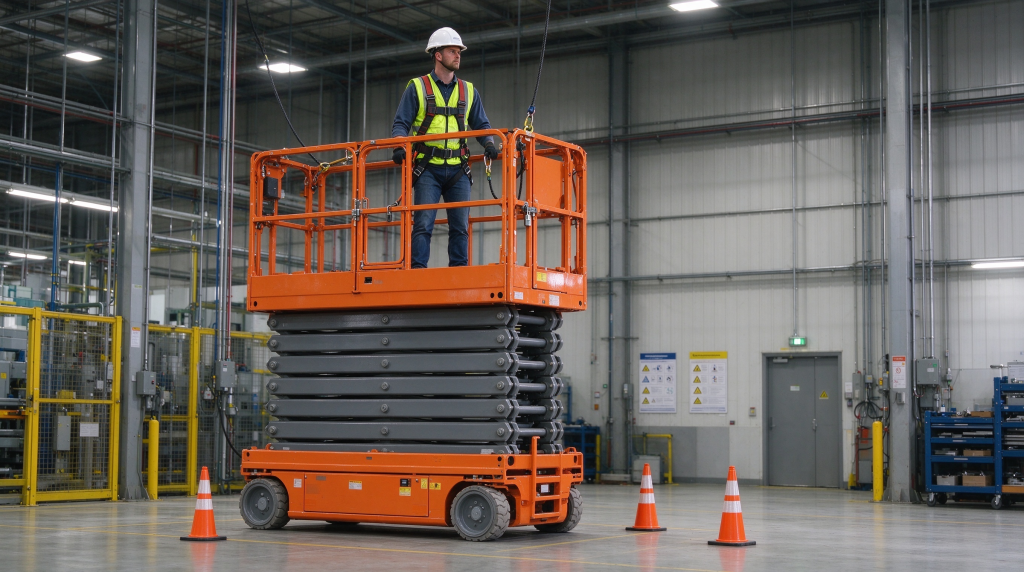
Scissor lifts are common aerial work equipment for factory maintenance, construction installation and warehouse inspection. Though simple to operate, improper use easily leads to overturning, falling and electric shock incidents. Below is a standardized safety operation guide for operators and site managers.
1. Pre-operation: Inspect First, Then Start
Most accidents happen because operators skip pre-use checks.
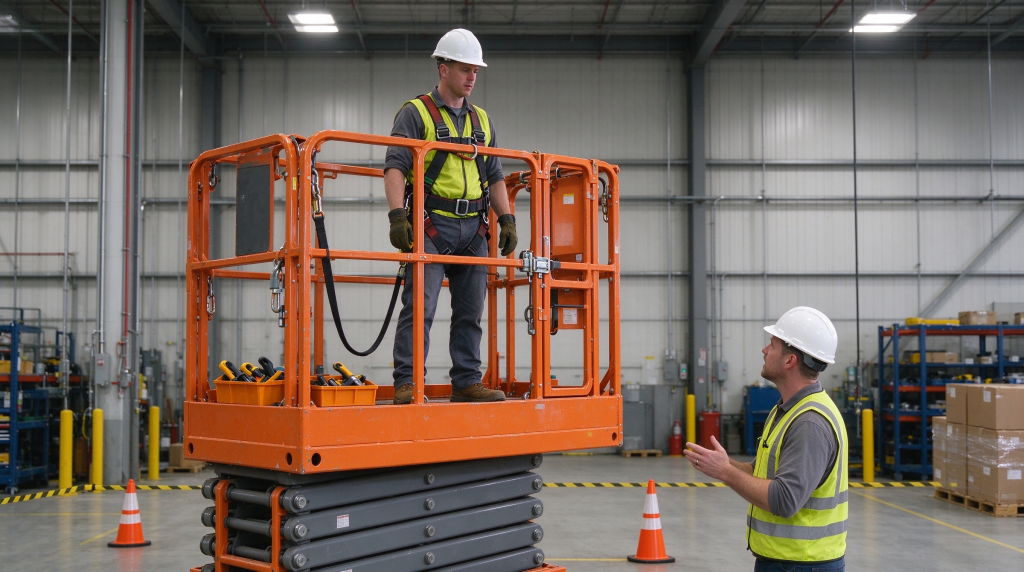
- Qualified Operators Only trained and certified workers can operate the scissor lift. Operators must wear safety helmets, high-visibility vests and safety harnesses. Attach the lanyard to the designated anchor point on the platform, never hook it on the guardrail.
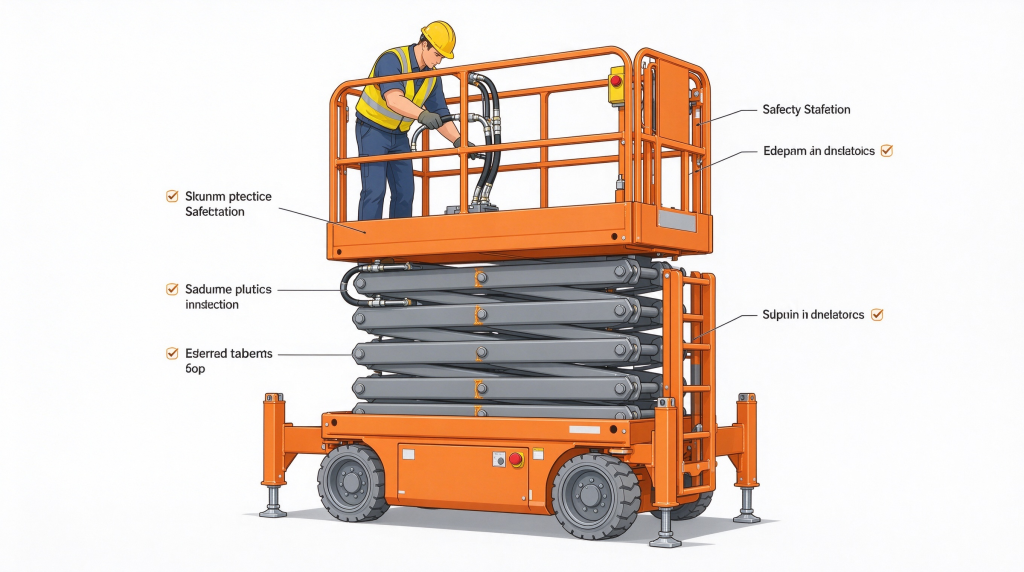
- Visual Inspection of the Whole Unit
- Check scissor arms, pins and welds for deformation or cracks. Confirm no hydraulic oil leakage or damaged hoses.
- Cables and control wires should be intact without broken insulation.
- Guardrails and entry gates must be complete and lockable. Do not remove safety guards.
- For models with outriggers: extend and level all outriggers firmly on solid ground.
- Worksite Assessment
- The ground must be firm and level. Avoid soft soil, pits, trenches, thin cover plates and sloped surfaces.
- Keep a safe distance from overhead power lines, pipes and steel structures.
- Set warning cones and barricades to block unauthorized personnel from entering the area under the lift.
- Stop outdoor work in heavy rain, snow or strong wind (do not lift when wind speed reaches 6 or above).
- No-load Test Run Power on and test the up, down and emergency stop buttons. Run full lifting cycles without load to check for abnormal noise or jamming. Make sure all safety limit devices work properly.
- Check Rated Load Check the nameplate for maximum capacity. The total weight includes operators, tools and materials. Never overload. Distribute loads evenly on the platform; avoid heavy weight on one side.
2. During Operation: Follow Standard Procedures
- After entering the platform, close and lock the entry gate. Stand firmly on the platform floor. Do not climb on guardrails, place boxes under feet or lean far out to reach objects. Lower the lift and reposition the machine if the position is not suitable.
- Do not drive the lift while elevated, unless the model is specially approved by the manufacturer. Move the machine only after the platform is fully lowered.
- Raise and lower the platform smoothly. Avoid frequent jogging or sudden movement. Do not throw tools on the platform.
- Watch out for overhead obstacles, forklifts and passing vehicles to prevent collision.
- A ground attendant is recommended on site. The attendant should know how to perform emergency lowering and keep communication with the operator.
3. Strictly Prohibited Behaviors
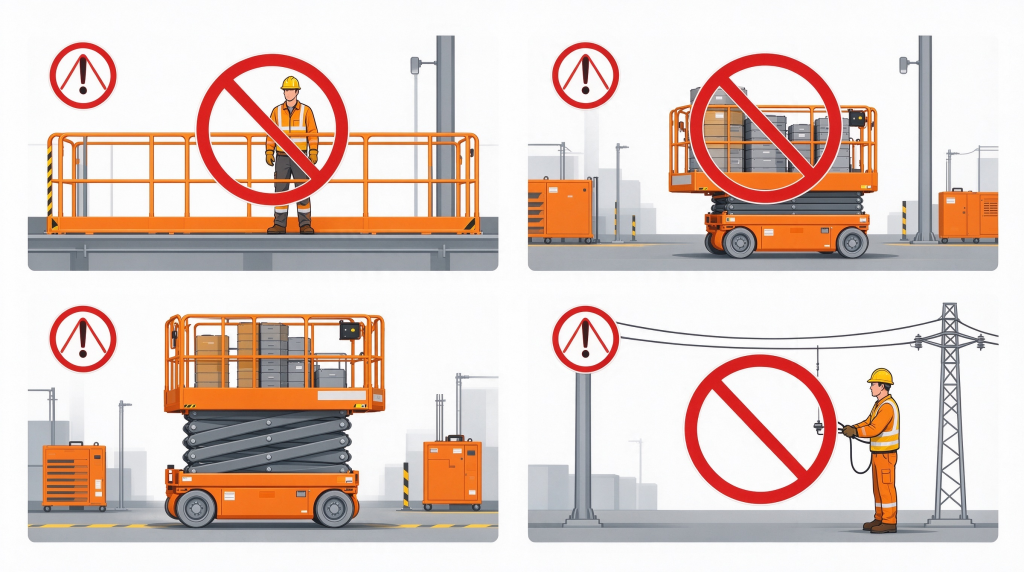
❌ Overloading or unbalanced loading
❌ Removing, tying or covering guardrails and safety gates
❌ Placing ladders or planks on the platform to gain extra height
❌ Working too close to high-voltage power lines
❌ Traveling with the platform raised
❌ Standing under scissor arms or the chassis
❌ Continuing operation with oil leakage, strange noise or known faults
❌ Operating under alcohol, fatigue or poor health conditions
❌ Unauthorized modification of hydraulic, electrical and safety limit systems
4. Emergency Response
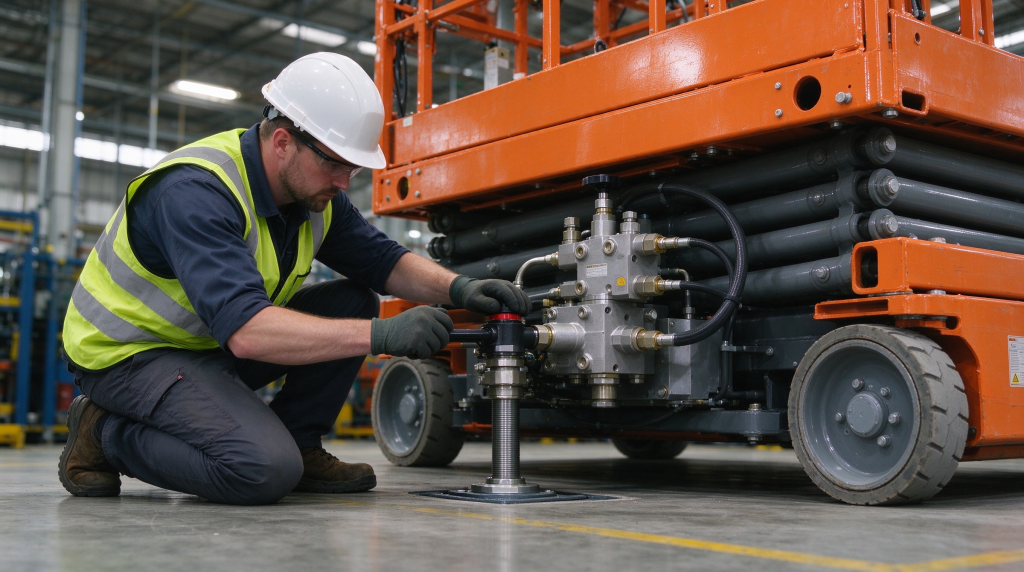
- If the platform stops mid-air due to power failure or jamming: Stay calm. Do not climb over guardrails. The ground attendant can slowly lower the platform with the manual emergency lowering valve according to the user manual.
- In case of tilting, abnormal noise or oil leakage: Press the emergency stop button immediately. Lower the platform safely, evacuate personnel and lock the machine with a warning tag. Contact professional maintenance staff. Do not use the faulty lift again.
- Electric shock risk: Cut off the main power supply first. Do not touch the victim directly with bare hands.
5. After Work: Proper Shutdown & Maintenance
- Lower the platform completely to the bottom position.
- Clear tools and debris from the platform, clean oil and dust on the machine.
- Turn off power, remove the key and fill in the equipment log. Report defects in time.
- Schedule regular maintenance by qualified technicians: hydraulic oil replacement, pin lubrication and cable insulation inspection.
Conclusion
A scissor lift is not a simple scaffold. Its safety relies on intact safety components and standardized operation. There are no shortcuts for safety. Always inspect before use, respect load limits and follow safety rules to reduce aerial work risks.